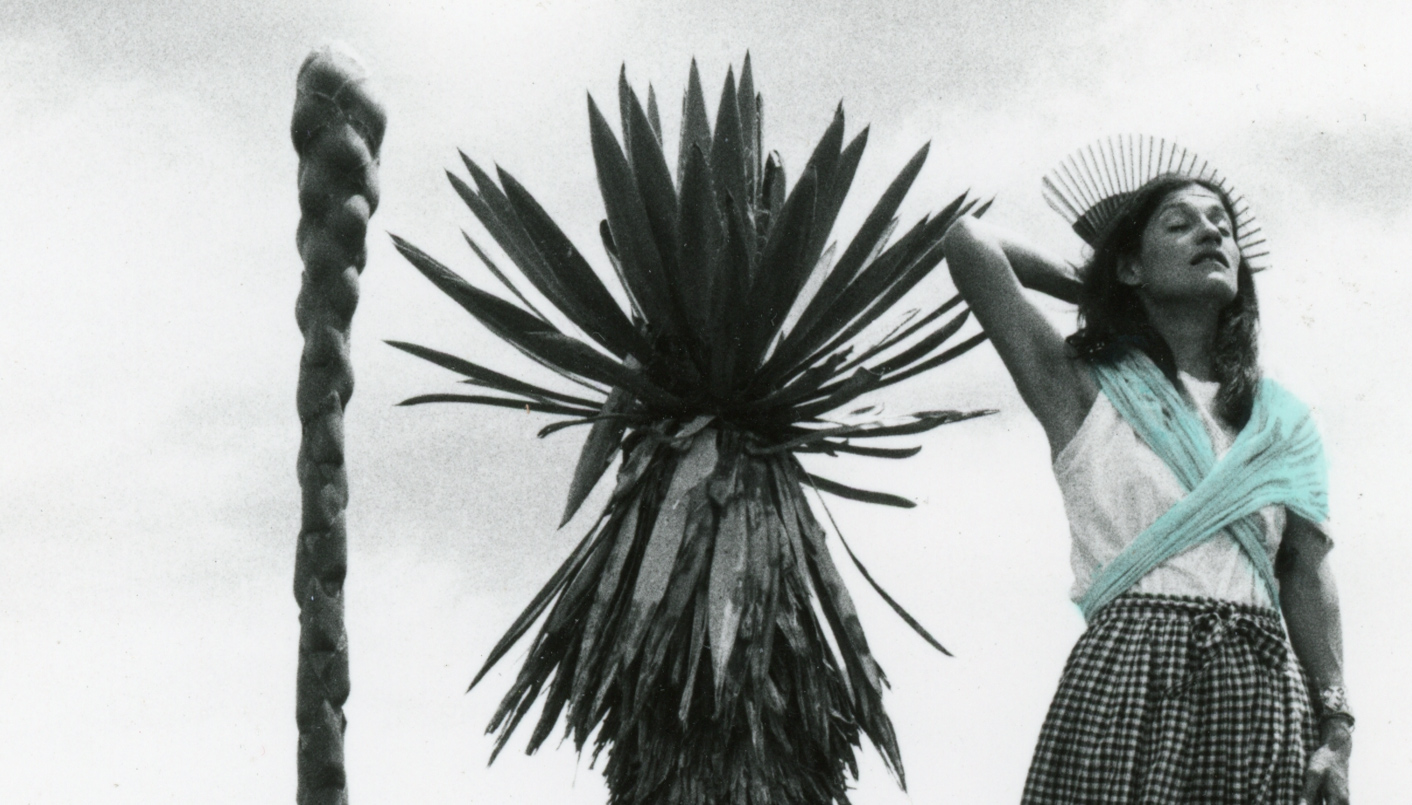
1. Jesusa was born on the day sign ‘olin,’ signifying movement associated with deity Xolotl, patron of, among other things, doubling and twinning.84 A life of transformation, of becoming, in this telling, announced at birth. But Xolotl also disguises itself, just as Jesusa does. Doña Teresa, a shaman who led us in a mushroom journey in 2024, asked Jesusa: “why do you always hide your face?”85
Laura María de Jesús Rodríguez Ramírez, who renamed herself Jesusa at an early age, is the youngest of eight children born to Isidro Rodríguez León, a renowned thoracic surgeon, specializing in tuberculosis, and María de Jesús Ramírez Gama (Doña Jesusa), a formidable creative force who forbade her five sons and three daughters to engage in the drudgery of housework and too much studying to better hone their notable talents in music, writing, performance, dress up, parties, and all forms of creative play.
As in almost all Mexican families, the father was the boss. Worldly, cultured, and highly respected, he was an outstanding doctor when tuberculosis was widespread. He operated in the morning and in the afternoons cared for all the needy in the private office adjoined his home. But he had little involvement in the day to day lives of his children except to demand high academic achievement, especially from his five sons. The girls didn’t matter much, as they were expected to marry. By the time it came to the eighth, Jesusa, he didn’t even want to pay for high school.
As members of the cultural elite, it was assumed the children would attend private schools. The parents, though both anti-clericals, chose to send them to Catholic schools, not because they thought they were good, but because they were affordable. Doña Jesusa told her daughters to obey the nuns but not to believe a word they said, creating (as they admitted) a very confusing situation for them.86
Jesusa was not about to obey the nuns. “I remember that I didn’t like to have my hair combed because I had knots and it hurt. So, I was just like a freak, and they treated me like a freak, because in the nuns’ school, all the girls were perfect. But at the same time, I got very good grades. So they were screwed because I was very studious. I liked to study; I always liked to study.”87
With so many children, the Rodríguez budget was tight. Nonetheless, their house was animated, and their priorities were clear: “We ate beans, but we had two pianos.”88 And though Dr. Isidro was distant from his children, Jesusa and her father were close. She spent most afternoons with him in his office, memorizing Egyptian dynasties, all the parts of the human body, and other areas of knowledge that he felt she needed to master. When he returned from his international travels to medical conferences, he would bring back slides of works from major European museums to show and quiz his children. Which is the El Greco? Goya? Dalí….? It wasn’t long before the ten-year old Jesusa, who read and memorized everything, started recounting her own travels, as the ‘Nueva Rica,’ the Newly Rich, who boasted of her trips to Europe and Africa, making fun of everything: “Then I went to Africa but I was very disappointed because it looked like [a local neighborhood] full of palm trees.”89 The Eiffel Tower, she’s said, was made of shameless steal, and she’d boat around in the Venetian glandulars. She tapped into some of her father’s obsessions but transformed them: “everything was a joke.”90 21
It fell to the mother, Doña Jesusa, as was the norm, to rule over the very large family home—a rambling house in Coyoacán, a couple of blocks from Frida Kahlo’s.91 Frida asked Doña Jesusa to visit with her children, because she loved children and didn’t have any. Doña Jesusa replied, “you don’t have children, but I don’t have time.” She had her hands full, counting her brood keeping up the big house with many rooms, high ceilings and thick walls dating back to the period of Cortés in the 16th c.92 Although (or because) she was raised in a conservative, well-to-do family from San Luis Potosí, a state to the north of Mexico City, Doña Jesusa loved people, parties, music, games, and creativity of all sorts and encouraged her children to invite their many cousins and friends to eat and stay as long as they liked. Doña Jesusa, a fine musician, played piano (by ear) with Mexico’s leading musicians, including her friend, the legendary Agustín Lara.
Doña Jesusa was also an indulgent mother. When one of her sons came home with a bad report card, she hid it from her husband. “Poor thing,” she’d say. “The problem is that your teachers ask you things you don’t know.”93 Or if her daughters complained about something the nuns said, she’d reply: “Don’t pay any attention to them, they’re a bunch of sourpusses.”94
Theirs was a “party house.” “Everything was permitted as long as it was play, fiesta,” Jesusa remembers.
Play opened the realm of possibility. Everyone could ‘be/come’ as they liked through play. The house existed in a state of transformation. Each weekend it filled up with kids and turned into a playhouse of sorts. Doña Jesusa converted a long, very large patio in the entrance to the house into a roller-skating rink. The older sons formed a rock band. Marcela, the oldest daughter (and now a world-class composer), played the guitar because, she recalls, the line for the piano was always too long, even after they bought a second piano. Their house became a center for the best guitarists from Mexico and abroad. Leo Brouwer, the famous Cuban composer and classical guitarist came to visit and then stayed for months. The large living room served as a stage with an elevated area with a grand piano and make-shift curtains for theatre skits and full stage performances presented by the younger four, created and directed by Jesusa. The space was large enough to hold a good size audience. One wall in the house became the “mural newspaper” where Doña Jesusa started posting instructions: “Close the doors. Look after the house. Don’t go out. Be careful who you marry!” The kids started writing their own messages. “There’s a party tomorrow is such a place. Let’s have a party here this weekend!”95
People and things came and went. Objects moved around and morphed into something else. The clothes washer became a prop in a play. Used and old clothing, including Doña Jesusa’s wedding dress, suddenly turned into costumes and stage curtains. One day a four-foot mermaid appeared. A year later it disappeared. No one knew who brought it, or why.96
In addition to all the regular parties and activities, they hosted a themed party every May to celebrate Dr. Isidro’s birthday. Important physicians and well-known artists (many of them his patients) attended. One year it was ‘The Existentialists.’ Another, a ‘Wild West’ theme. Doña Jesusa called the carpenters to take off the wooden closet doors and convert them into saloon doors. Marcela recalls that the carpenters were called on so often they almost lived in the house. The house, furniture, and household objects were in a constant state of flux. Nothing was ever 22
still, in its place. Their house, as writer Carmen Boullosa describes it, “was a great stage.97 Doña Jesusa “allowed everything to be moved all the time,” Jesusa’s longtime friend, the visual artist Magali Lara remembers.98 “Whatever was a defect in our house was a marvel in theirs.”99
These parties of the 50s and 60s were all about shapeshifting, putting on, dissimulation, and disguise. Nothing was as they appeared. This gave adults permission to transform as well. The doctors and their wives dressed up—the ‘tisiologos’ (phthisiologists—treating tuberculosis) and their wives, the “tisiolocas” (phthisiocrazies). Jesusa remembers, the men cross dressed. “These doctors dressed as women in the dress-up parties, because everything was allowed.”100 “And my father, too. Suddenly he came out like that, dressed as a lady. It’s funny, but they were not transvestites.”101
The party world made room for the queer world, the one in which her closeted bisexual father actively participated. Many of the doctors, Jesusa remembers, were gay, but they had wives. The rules were clear: everything was fine if no one noticed. Male infidelity, while socially tolerated as ‘normal,’ was strictly imagined as heterosexual. A well-to-do male friend of the family drove around the neighborhood in a new convertible to show off his girlfriends, his wife be damned.102 Machismo, not homosexuality, was the accepted norm. People had to seem conventional. But they didn’t have to be conventional. Jesusa grew up in the realm of simulation, the world of the ‘as if.’ While everyone had to conform to the appearance of the ‘normal’ patriarchal, straight, Catholic family, some could do whatever they wanted behind the scenes.
The violence of this world, however, was very real. Jesusa was a lively and very active young child (a self-defined ‘terrorist’ and a performance artist who captivated her schoolmates) until an older brother started sexually molesting her from age five or six for a period of two or three years. She doesn’t remember the dates exactly, but she shrank into a shell. “He was a very, very violent presence in my life.”103 She stayed in her room, playing with her dolls, and had to be coaxed out to interact and go roller skating with her siblings, cousins, and other children.104 “I was withdrawn, I would get home, I would climb the fig tree and I didn’t talk. At school I didn’t talk, but I was very naughty at the same time. Like now I’m very naughty, very adventurous. And very twisted.”105 From this, the designation ‘autistic.’
About five years later, when she finally told her parents about the abuse, they didn’t believe her. “That girl’s lying,” her father said. She told them that the brother also molested all the women who came to work in their home. “My mother never wanted to know,” Jesusa says. That son was her favorite, and “she was brought up not to know, not to notice.”106 They acted as if nothing had happened. Simulation reigned. Jesusa pulled away from her family.
Looking back, Jesusa reflects on the brutal machismo of her growing up. “It’s weird what you experience as a child, when that happens to you, because you are part of it. You’re growing up in your sexuality, so you’re also part of the discovery of sexuality. For him, (her brother) it was kind of normal, wasn’t it? … It’s part of that fucked up Catholic upbringing, right? Who knows what the Marists, the Catholic priests at school, pedophiles, did to him. Because the abuse, the pedophilia, in the Catholic Church is structural….
But one is left with a very strange feeling, in the body, in the spirit. And for me it became…. [pause] it wasn’t only a sexual issue. He was very aggressive. He always was.”107
By the time she finished grade school, the young Laura, known as ‘Chiquis’ (from chica, ‘little’) to her family and ‘Lauga Gogiguez’ (as the French nuns pronounced it), changed her name to Jesusa. For one thing, it was her mother’s name. Jesusa’s relationship with her mother, she admits, “was very intense… she wanted me not to go to school but stay home with her.”108 For another, she started to regain her earlier feistiness and sense of rebellion. Learning, for her, was participatory, enacted. Her homework on Ancient Egypt was written on a scroll and delivered as a performance with her dressed as Nefertiti.109
The sexual violence she experienced had shut her down but eventually, she says, she “got beyond it.”110
I asked her how she ‘got beyond it.’
In her dreams. Jesusa talks a lot about dreams. “My dream life matters and affects me a lot.” Dreaming “opens a channel of strange perception…. like Coleridge’s Rose, dreaming a rose and waking up holding it in one’s hand…. It’s no wonder that I solved my problem. That trauma, or that violence, or that thing, because I don’t know.”111 She resolved ‘that thing’ in the deeply interconnected pathways of her waking life and dream life.
“My dreams were very distressing because he was harassing me, he was chasing me… Once (in waking life) he threatened to hit me with a pipe. I looked at him very powerfully and he calmed down. And I realized that I could somehow stop him with my eyes. 24
But in my dreams, I could not. I would always scream, and my voice wouldn’t come out. And then I don’t remember at what age, but I was older like 25 or 30 years old. I was dreaming that I was like the bat of Monte Albán, on top of an arch. Below there was a door, and I was on top of the arch, with my arms outstretched and that mask, that face of the bat. And he would come in, like in my dreams, the completely hallucinatory architecture of dreams. And he’d come in and he’d look at me and he’d be terrified, and he’d run out terrified. And I was calm. I just looked at him and saw him running away. And I never again dreamed that I was afraid…. It was resolved in my dreams.”112
Dreams recur in Jesusa’s life, strengthening her, helping her resolve issues, and at times illuminating the way forward. In her waking and dream life she found how to tap into her power—she could stare down those who would hurt her—a process that continues into the present.
Dreams connect her to other forces as well. “Very recently,” she told me, “I dreamt of a stone, and I found it the next day in the same circumstances that I dreamt it. The dream was connected in a way, as if there were a channel. If you go into that channel, the dream connects to real life…113 Jesusa’s dream life, like her waking life, is intense. Paula Monaco Felipe, Liliana’s niece, said to me: “Jesusa doesn’t rest. Ask her how she dreams. “I dream two or three dreams at the same time. I never dream just one.” Jesu lives thinking in three rings, like a three-ring circus: three stages. That’s how her head is. She doesn’t stop; she doesn’t stop.”114 Jesusa is in a hurry: “We have to sleep fast, eat fast, breathe fast. We can’t rest or get sick. We have to keep moving.”
2. “Acting was a way to disappear, to hide from myself and others.”115
“Anyone who is a professional actor will have experienced certain moments when something special happens, when you allow yourself to be possessed by ‘that something’ that keeps you on tenterhooks and you are no longer yourself. It is like those dreams that are so vivid that when you wake up, you don’t know if they really happened or not.”116
Theatre—the ability to transform into an/the Other– helped Jesusa ‘get beyond’ her trauma; it became her safe space. When she was young, she says, she was terrified of adults.117 As an adult, she adds, even more so. As a child, she staged performances with her dolls, and then with her three siblings closest in age to her— Gabriela, José Manuel (‘El Caníval’), and Marcela.118 The four youngest made up their own creative cohort. After all, everything was permissible in play.
“I was super shy, but on stage I didn’t give a damn about anything… Theatre was a way to escape, not just from an adult reality that I didn’t share and didn’t understand. Theatre was purely based on freedom, on just having fun, just laughing, just doing what was fun for you and others.”119
Play became the realm of possibility.
“Down here, everything frightens me, but on stage I feel protected because it is the world I invented for myself, and I can do anything there.”120
Jesusa began the journey of self-naming. ‘Jesusa’ fit her as she grew into an anti-Jesus of sorts: a female, lesbian, outspoken, anti-capitalist, rabidly anti-Catholic ‘Jesus’, whose mission was to act out against all the forms of repression the Catholic Church promoted and stood for. As she rejected the hypocrisy and cruelty of the patriarchal, Catholic, heteronormative, misogynist, and racist world of Mexico in the 50s and 60s, she was expanding and defining herself, imagining alternate spaces for fun and invention, subverting obstacles, including the brutal gender binary, with humor whenever possible.121
Jesusa was always a queer child. In grade school she made cut outs and collages mixing genders—men carry handbags and doing their hair. Women flexing their muscles.
Chiquis: “And they said they’d seen me in a dress.”
“I was always non-binary. At least that which I always experienced has that name now. Even so, ‘non-binary’ seems reductionist because it starts by negating the binary, and I think the binary has always been useless. I prefer to say that I’m nepantla [in between].”122
As a non-conformer, Jesusa refused to have the traditional quinceañera, or sweet 15 coming out party that was mandatory for girls of her social circle. Her mother insisted, and she finally accepted, on condition that she could do what she wanted—she wanted an orchestra and “chambelanes” or escorts. She dressed in her old first communion dress that popped open in the back, wore her red tennis shoes, and jumped out from a heart-shaped paper screen at the top of the staircase. She then pranced down the stairway to the music of the orchestra surrounded by the chambelines who accompany the quinceañera in traditional celebrations. Instead of the customary red carpet, the stairs were lined with a long red banner a couple of her brothers had stolen for her from the Luis Echeverría presidential election campaign. Everyone burst out laughing. Why does she do these things, her beleaguered godmother asked.123 Jesusa’s sisters remember: “Everything was theatre since the day she was born. Everything was spectacle.”124
Jesusa continued drawing and acting when she entered high school although she still said she wanted to be an archeologist. She left the nuns and entered a semi-public high school in her 26
neighborhood. She was an excellent student, brilliant, disciplined, and capable of remembering everything. She worked extremely hard, giving herself up to whatever she took on, and she excelled at everything she did.125 But she couldn’t tolerate shams. At graduation, she tore up the diploma she’d been awarded for best student. Recognition meant nothing, she said in front of the whole school and the representatives of the Ministry of Education, when teachers give easy grades and play favorites.126 It was now no-holds-barred. She would do what she wanted to do. She drew comics, designed stage costumes, acted, and mastered ping pong, placing second in Mexico’s national championship tournament.
3. “The show must go on.”
At home in the early 70s, gender violence continued to mix with sexual violence. Dr. Isidro’s bisexual lifestyle was becoming noticed. What might he do to protect himself, one of his children worried. They had the antecedent of Tía Nena, an aunt of Doña Jesusa’s who had a beautiful smile. She had married a doctor who was a perfectionist and extremely cruel and demanding. He tormented his wife for the most minor speck of dust or other ‘infractions.’ His shirts, he claimed, had not been folded properly. When she learned he was having affairs, she confronted him. As vengeance, he decided to have all her teeth pulled out and committed her to a hospital for the mentally ill. Once there, she tried to kill herself by putting her arms in a fire. Now deformed and toothless, she was released when her husband died suddenly. She returned home where the girls met her. They loved what Jesusa describes as her completely whacky humor and approach to life.127
The fear, expressed by one of the siblings, that their father might have their mother committed to silence her might have been founded in family lore rather than on the current situation. Nonetheless, the sibling hired a private detective and proved that their father was bisexual and planning to go off with a lover.
Jesusa: “When my mother finds out and announces it to society …
Diana: She tells everybody?
Jesusa: Yes, she destroys him, she tears him to pieces.”
It pains Jesusa to think of her father: “It was a macho world out there. My father went down brutally. He went to live in an apartment. He came to the office (in their home), but we didn’t talk to him because that’s the way it was: “don’t talk to him!” And I loved him so much… I saw him so alone in the afternoons, there at his desk. But my mother said, ‘come here’! He was already very destroyed by that time.”128
I asked if she saw or spoke to him again. “They wouldn’t let us. The situation was implied: there had been a breakup and that was it. My brothers left the house, and some of them went to see him. But that’s how it was, wasn’t it? The girls pulled that way, and the boys pulled that other way. It’s very weird. In fact, we also left. My mother said, ‘you’re coming with me’ and we went to live with some friends. Then he left and we went back to the house.”
Two years later, in 1974, Jesusa, El Caníval, and Marcela were rehearsing a full stage production of a play they’d written inspired by the films ‘Cabaret’ and ‘The Godfather’ which they were 27
staging in their very large living room. [See Images and Script] El Caníval remembers that Jesusa was very taken with Liza Minnelli and the privileged role of cabaret in the Weimar Republic. The joy of cabaret for her was that it opened a space for pleasure and an alternate reality in a war zone.
Then they received news that their father had died. “It was very shocking for us,” El Caníval said, “but we were in the middle of the production of the play. And our mother said, ‘you must go on with the play, you can’t stop, you must put it on. It’s a shame that your dad died but go on with the play.’”129
And they did.
Jesusa suspects that her father let himself die.
Their play, “The Dancing Club Connection: a melodramatic tragedy in three acts” was so good that they had several invitations to stage it commercially in theatres.130
When I asked Jesusa about her father, she said that the medical world in Mexico at the time was very gay. Her father, who she thinks of as bisexual, looked after sailors in the Marines. “That’s where the party was, those were blowouts, very handsome sailors, very young… So imagine… You’re a doctor to the sailors. You get to choose.” Gay clubs, when I asked her, she thought were not part of his life. “No because you had these other spaces completely open. So why you would go to the underground club when you had the whole Navy?” But she recognizes the risks and the costs of non-normative sexuality were enormous.
“It was terrible, wasn’t it,” she asks me rhetorically. “Now that I think about it. What barbarism! What a stupid and unnecessary thing to do, right? I feel that my father was blackmailed. They must have taken a lot of money from him not to tell. The whole society is a mess of bullshit that ultimately causes a lot of suffering. And that’s it. That’s all it does, cause suffering, because it’s all pure idiocy. But that was Catholicism, those conservative prejudices, that conservative world that just forces you to live like that, with pendejo suffering. Because if you suffer for something worthwhile, maybe? But for nothing?”131
There are things I do not ask her. How did her mother’s reaction to her husband’s sexuality affect her, Jesusa? Did she and her mother ever talk about it? I guess I know what she’d say. Her mother had been raised not to know. And Jesusa adored her mother and her father—she was not going to lay blame.
The ‘show must go on’ mantra stayed with her.132 “No one, no one, not even God, can stop the show,” she says when talking to her actors in ‘Ambrosio.’133
4. Jesu S.A.
The year her father died, and she finished high school, Jesusa entered Americas’ oldest and most renowned art school, Academia San Carlos in the mornings. There she ran into Magali Lara who had gone to the same religious school with the French nuns. Lara remembers Jesusa greeting her with:
“You don’t remember me because I was one of the ugly ones and you were one of the pretty ones… I was ugly because I didn’t brush my hair and I didn’t brush my teeth and I had a ponytail…”
Lara understood Jesusa’s assessment given the reality of the religious school where ‘pretty’ was equated with light skin and eyes. “And well, someone who has such an image of herself, and with this humor, seemed to me absolutely endearing.”134 They went on to do a great deal of work together, including 13 Señoritas with Carmen Boullosa. They remain friends. Jesusa continued drawing full length comics, graphic ‘comic’ books on the history of art, such as ‘El Partenon, El Erecteo, y Los Ordenes’ and ‘Las cuatro dimensiones de la historia del Harte” (Arting Around).
Even back then, she reflected quizzically on Western philosophy:
And comics on the travails of being born female (for Fem magazine).
Some of these works were assignments. Jesusa remembers that one of her teachers didn’t consider her work serious enough and failed her. Jesusa kept doing what she does. Again, she modified her name, signing some of her works Jesu S.A. (S.A. means corporation in Mexico). One could say Jesusa simultaneously declared independence for herself and incorporated herself, became self-sustaining yet part of a greater whole—the community of friends and women artists and intellectuals she surrounded herself with.
Marta Lamas, a leading Mexican feminist scholar and activist, met Jesusa in the late 70s through Fem, the feminist journal. She remembers her as very young, as indefatigable, as “una yegue desbocada que hacía muchísimas otras cosas” (unbridled mare who created all sorts of things”).135 Among these ‘things’ were Jesusa’s graphic novels that made all sorts of jokes, both visual and verbal, and critiques of the ills she sees around her—Western theories of art and philosophy, gender violence, the contamination in Mexico City, the overcrowded transportation system, both public and private. Even her drawings are performatic, trying to capture movement. Everything worth knowing and sharing for her happens through play.
5. Simulation, Mimesis, Transformation
Now BLEED!!!!
Jesusa’s early comics show her venturing into magic and mimesis. Her theories of paleolithic art of the 1970s posit mimesis or, what she calls ‘magic,’ as “an inexhaustible source of fun (dance, covens, orgies) … based on the law that The Similar IS The Similar, if an object looks like another it is the same object.”136 The painting of a bison in a cave IS a bison (undigestible, she concedes, if eaten), she says, drawing from a classic text by Arnold Hauser. She goes on to distinguish between “imitative” or homeopathic magic, “[b]ased on the assumption that a desired result (rain, the death of an enemy) can be brought about or assured by mimicking it”137 and ‘‘contact” magic, “if I take a handkerchief belonging to you, I can practice magic with it because there’s something of you on it.”138 But, anticipating Michael Taussig, she posits that drawing the 31
bison gave those early artists control of the bison, “assuring that the same act would be repeated outside the cave.”139 Jesusa’s early understanding of mimesis that deepens into transformation foreshadows Taussig’s writings on mimesis “as an act of becoming something else, of becoming other.”140 Mimesis, he adds, “is as necessary to knowing as it is to the construction and subsequent naturalization of identities.”141 Transformation in art expands the possibilities of enjoyment and can prompt transformation in the arenas usually thought of as ‘real’ or stable life.
.
While studying art in the mornings, Jesusa enrolled in theatre school, the CUT, at the National University of Mexico in the afternoons. Maybe onstage actions could impact what happened offstage. The program proved disturbingly traditional, which for Mexico at that time meant Eurocentric, misogynist, and racist.142 She felt excluded because she was not ‘pretty’ enough, and not ‘güera’ (light skinned).143 She didn’t have a talent for realism, one of her teachers said.144 Theatre training, her teachers said, was an arduous discipline. Women, it seemed, had to be willing to strip naked for no apparent reason and suffer to be great. Why, she asked?145 Theatre for her was a pleasurable exercise of freedom, a journey for the imagination, an ‘otherwise,’ a way of suspending and even challenging the logics and hierarchies of a brutal society.
Julio Castillo, the renowned enfant terrible of Mexican theatre who had trained with Alejandro Jodorowsky was the one professor she adored. He understood her and what she wanted from theatre.
Theatre, he said, “is an instrument of knowledge, a form of investigation. Theatre is the art of revealing the essence, the essential.”
Castillo could tell she was restless, curious, a seeker and gave her advice for her journey:
If you want to reach the sun, travel by night, a refrain that reappears throughout her life, and this book.
After two years, Jesusa dropped out of CUT. She proved she did not need the university, or permission, or funding to do what she wanted to do– create theatre. She forcefully rejected the power structures and the simulation demanded of her: “I have always said I will never hide what I think, nor will I stop saying what I want to say, nor will I stop being the way I want to be.”146 This position which she continues to hold has both saved her and cost her friendships and institutional support.
Julio Castillo recognized Jesusa’s outsize talent and committed to working with her after she left CUT.
Simulation, according to Jesusa, is the basis of Mexican society, deeply rooted in Catholicism, that most cling to for dear life. It’s the unspoken ‘do what you want as long as no one notices.’147
The simulation Jesusa riles against is hypocrisy, pretending that one abides by social norms even as one defies or wiggles around them. This is the hypocrisy that allowed her to be abused, that destroyed her father and much else in the world she lived in. She attacked the pernicious hypocrisy and life-threatening ‘make belief’ that oppresses so many with its homophobia, 32
misogyny, racism, and other ills that hurt even the people who engage and uphold them. Jesusa turns her sights on Mexico’s practice of simulation, using theatre and performance to subvert the toxic belief systems in which most people spend their time.
“We [Mexicans] are liars; we are great hypocrites, and then someone totally new like Jesusa comes along and she tears everything apart. She offers Mexico, like nobody else in these times, a totally new world.” Elena Poniatowska.148
As an actor, a person who ‘pretends,’ who lives and knows through performance, Jesusa might be said to participate actively in simulation, understood as pretense. While simulation is a “show,” it’s usually understood as a “false show,” something designed to deceive.149 Imitation and pretending, however, are the basis of most Western theatre, a representational practice, which relies on the ‘what ifs’ and the ‘as ifs.’ Although relying on ‘pretend’ and ‘as if-ness,’ theatre does not usually traffic in deception, at least to the degree that the audience knows it is being deceived. On the contrary, people participate, enjoy, and often buys tickets to be deceived.
Theatre and performance enabled Jesusa to control aspects of what passed for ‘reality.’ Theatre and play have rules; they were forms of pretend and simulation she could understand and control. Here was a world she could live in.
“I didn’t have much of a separation between acting in the theatre and acting in real life because, for example, I used to fool my family with that story, for example, about the mermaid…”
Remember the mermaid that just appeared and disappeared a year later?
As Jesusa and Julio Castillo were leaving a rehearsal downtown at 3 a.m., she saw “one of those mermaids made of clay and paper mâché who play the handmade guitar, who have a whole tree of life” destined for the trash. Jesusa took it home and placed it in a “high place’ in the yard and then went to sleep. “When I woke up there was already a whole commotion in the house about who had brought that mermaid… They asked if I’d brought it, I said no. Pure wickedness. I did those things all the time. And then El Caníval tells me, he brought her, but don’t tell anyone…. People start to make up their own stories. And I was silent; it was a form of acting. It was a form of simulation. Imagine how theatrical it was for me to see how everyone invented their story, how everyone constructed a fiction. Because at the end of the day it was like theatre, you are the one who knows the whole story, after all. You manage the information, and like in the Senate, whoever manages the information, manages the whole theatre of the Senate.”
Jesusa learned young to control reality onstage and off as much as possible. Her own reality and the reality of others.
“So who controls the simulation? Well, better you than them, right?”150
Aside from what her (a)musings have to say about pretend and mimesis, I’m interested in what it says about the process of transformation Jesusa herself is experiencing. As she increasingly engaged with Mesoamerican forms of knowing, her understanding of mimesis deepens into a practice of transformation, of mimesis, “as an act of becoming something else, of becoming 33
other.”151 Painting the image of the bison, Jesusa intuited in her late teens, gives the hunter power over the thing. Art and theatre function as a way of getting to the ‘essence,’ a shared essence with permeable boundaries. They constitute ways of knowing: “I am a magical thinker. I am fascinated by science in many ways, but it is not my approach to life. I am not a scientist. I mean, art is not a science…. it’s another way of getting close, don’t you think? It’s another way of approaching.”152 Performance entails shapeshifting: she can tap into the essence of the other, ‘become’ other, and put on their skin (now metaphorically although the ancient Mesoamericans used to flay humans and powerful creatures such as jaguars and eagles to wear and take on their power).
The god Xipe wears the skin
of the victim, evident in the extra arms and hands draped over its’ shoulders.
Códice Borbónico, Lam.14
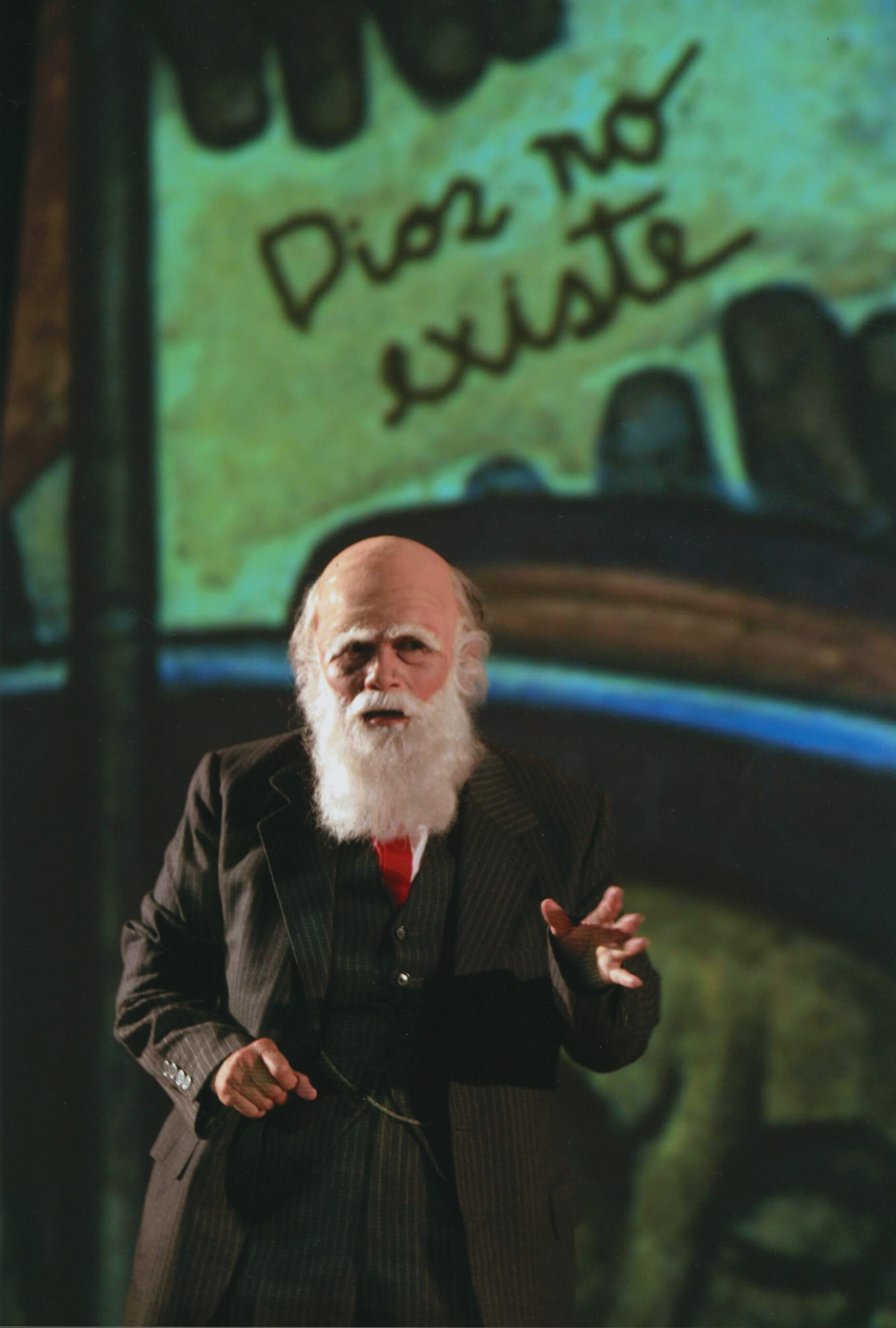
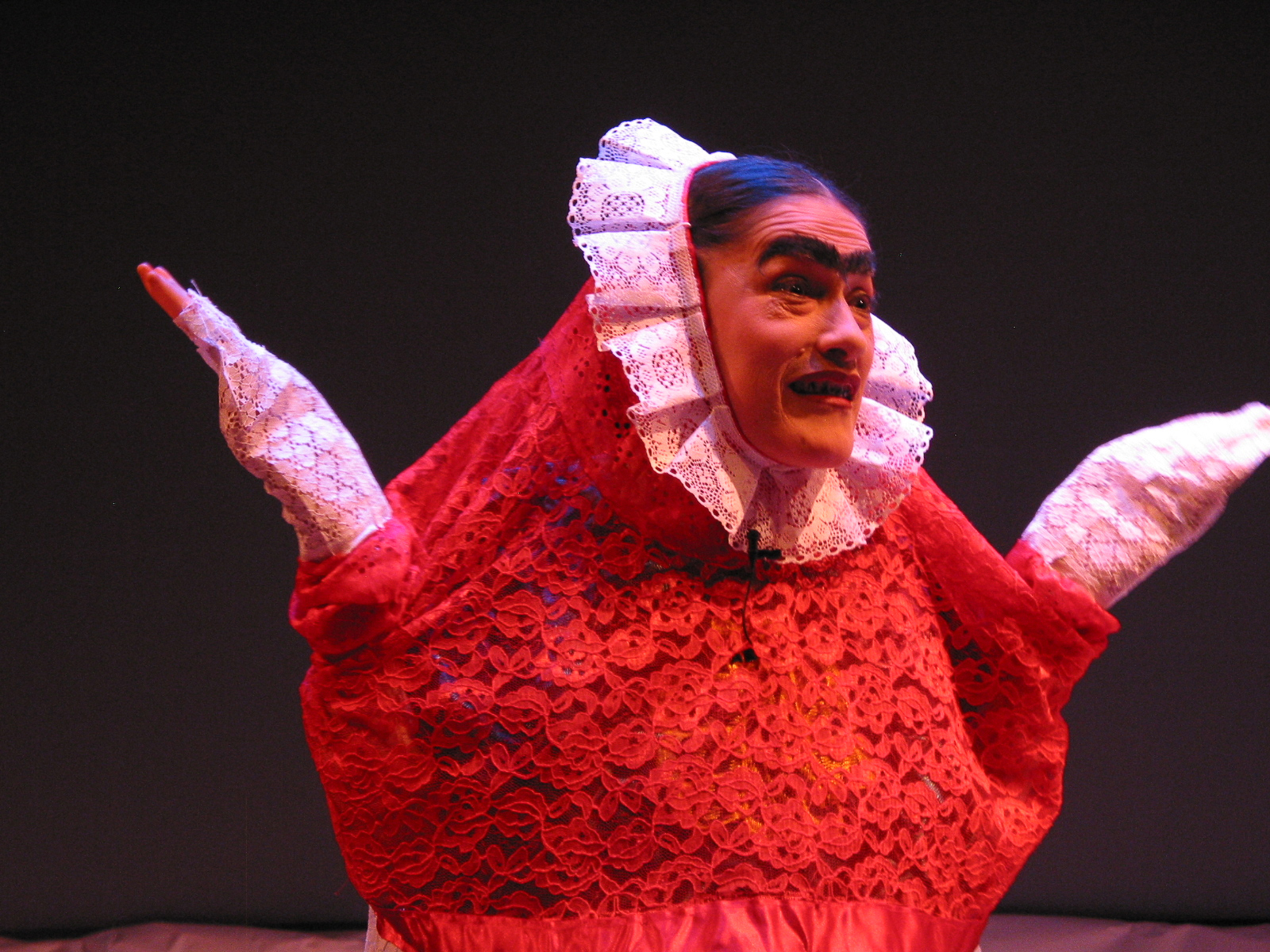
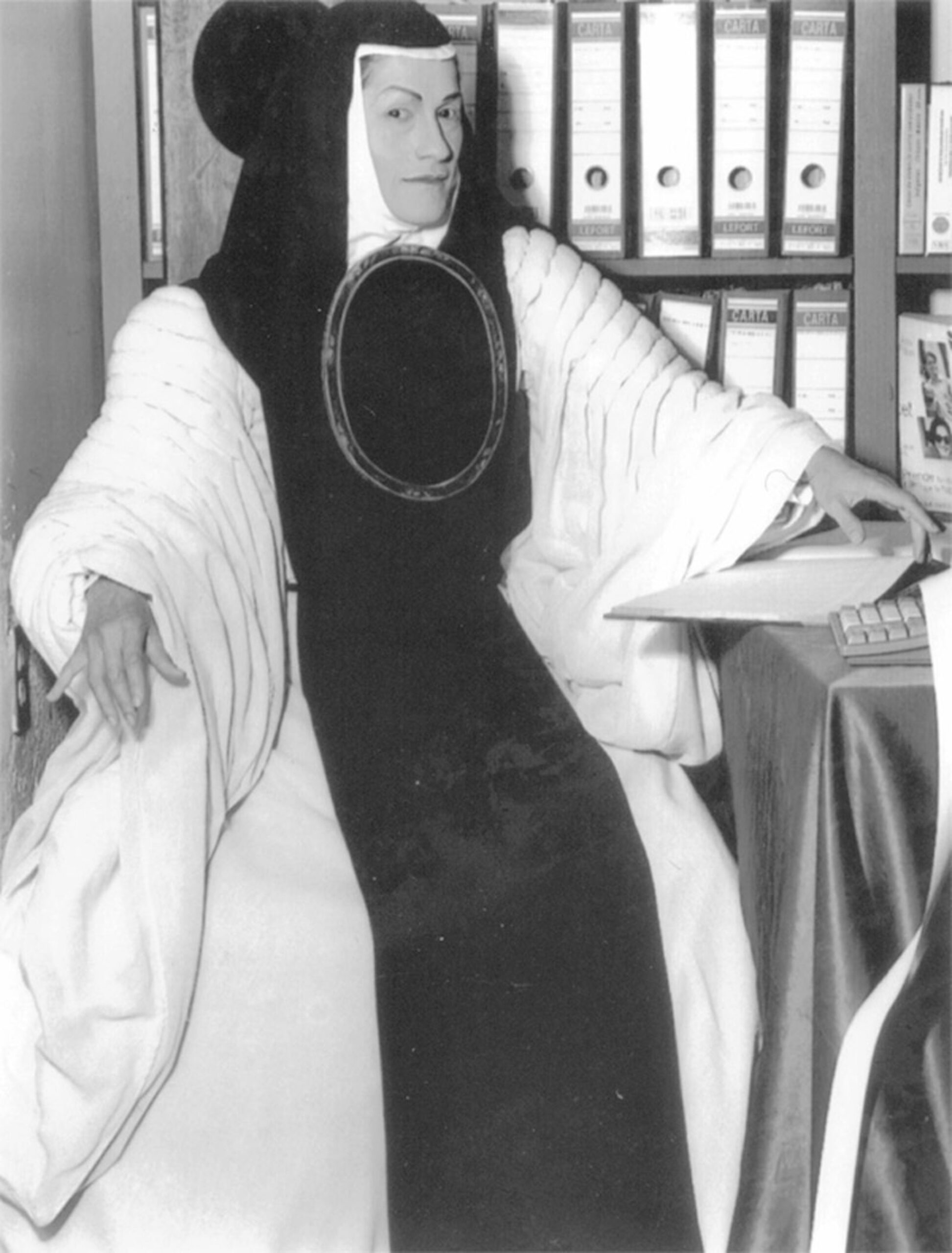
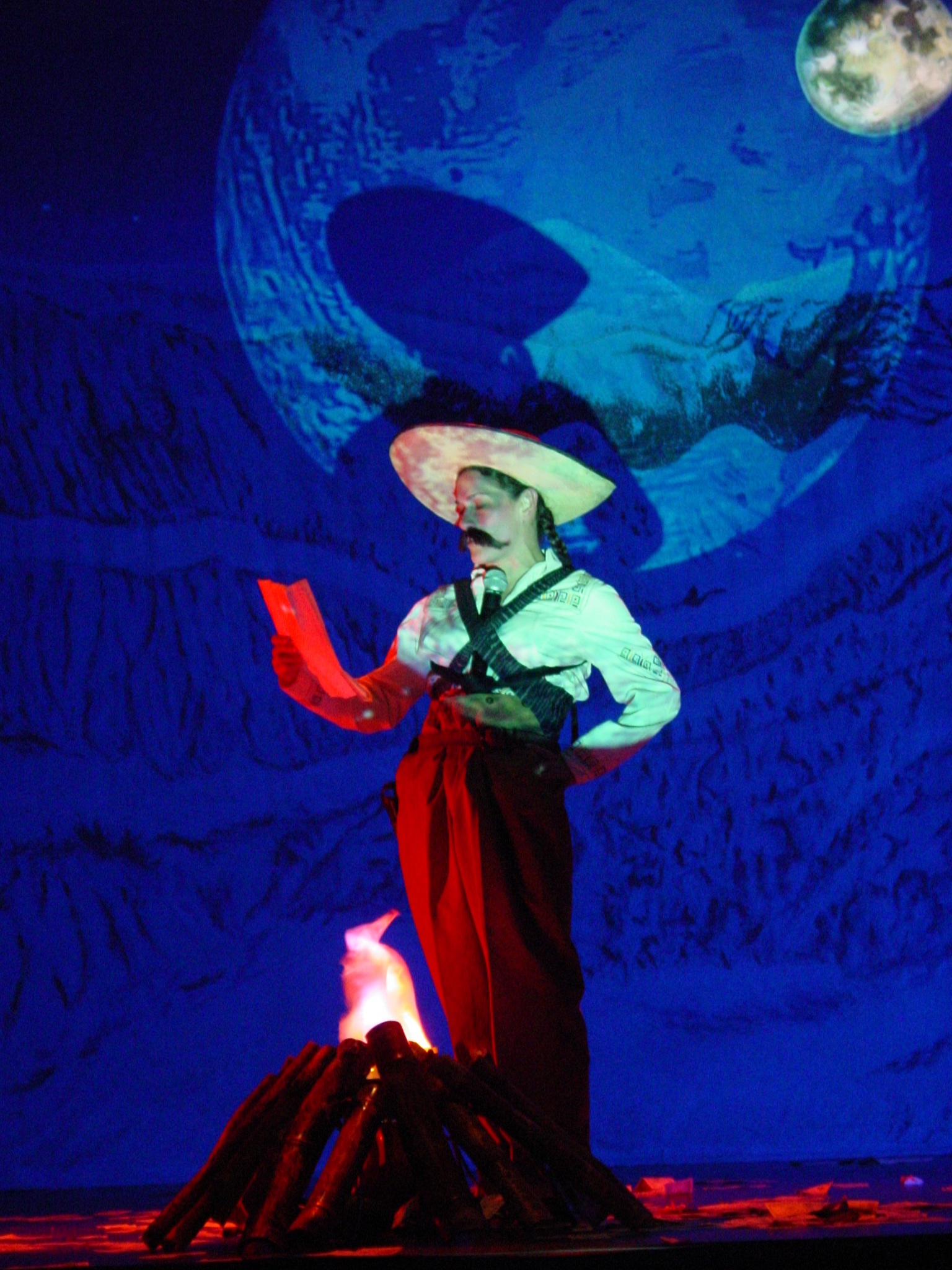
Becoming other and taking on other’s properties, as Jesusa explains in Chapter 4 on ‘nahualismo’ functions in a less violent fashion—she captures the ‘essence’ of the one she wants to take on. The characters she enacts—Malinche, Coatlicue, Sor Juana, and Frida Kahlo (among others)— come up repeatedly throughout her career. Through them she understands different dimensions of reality. Performance as in transforming and ‘becoming other,’ allows her, as she says, a way of communicating and “of getting close to the world.”153 Transferred to the social and political scene, these transformational practices can heal, instruct, and have tangible, material effects and consequences.154
Early on, Jesusa had intuited that theatre and performance enabled her to live, thrive, and play in a relatively safe alternative space. Theatre school, like her rigorous ping pong training, offered no room for fun. During high school Jesusa had trained hours a day with a Japanese ping pong instructor who worked her relentlessly until she placed second in the national championship. Ping pong, Jesusa says, is a lot like theatre. She had to have absolute control of herself and the strictly demarcated space. Rules applied. Yet improvisation and spontaneity were crucial. One had to be responsive and quick on one’s feet. While both endeavors were inconsequential in the ‘real’ world of finance and politics, the strategies one could learn from each were crucial in multiple ventures. Both demanded an enormous focus, concentration, and attention to detail. Both were exhausting and required stamina. And although the competition could be ruthless, no matter who or what one played, one always played against oneself. When Jesusa left the disciplinary training of both CUT and ping pong behind, she started to enjoy herself.
Cuicuilco, the abandoned ceremonial center, offered her another space to connect with another world—an ancient and magical place with pyramids, stella, carved rocks, and stones occupied only by lizards, butterflies, hummingbirds, and other creatures. Without knowing it, she endlessly rehearsed a Mesoamerican balance act, repeatedly stacking stones, one on top of the other, as high as humanly possible, as if the fate of the world depended on it.155 Life for its original inhabitants, she would come to learn, was a conceived as a balancing act, a very dangerous one: “…on earth we travel, we live along a mountain peak. Over here there is an abyss, over there there is an abyss….”156 Abyss here refers to annihilation, extinction.
Jesusa, who calls herself a risk-taker, continues to build as high as she can. When it’s impossible for the structure to support one more stone, she adds another. Theatre, for her, became another form of risk-taking. The human imagination expands by trying on, trying out, burrowing deeper, extending outward, always defying limits. She keeps pushing harder, and farther.
Jesusa continued working with Julio Castillo: theatre is the art of revealing the essence.
“When searching for the essence, I don’t mind being in extreme danger.”157
6. Sombras Blancas
After his interminable day jobs working in theatre and television finished around midnight, Castillo would join Jesusa and the small group of young women artists who were willing to show up at that hour in her bedroom to create theatre pieces about artists such as Sylvia Plath and Frida Kahlo. The group called itself ‘Sombras Blancas’ (White Shadows), was organized horizontally, albeit convened by Jesusa, and directed by Castillo.158 Jesusa designed the lighting, the costumes, and the set. Together, they devised the scripts. Everything they needed, they created. Jesusa perfected the Do-It-Yourself as feminist, performance methodology. None of these women ever imagined they could or would create the many things Jesusa asked of them.159 They rehearsed until three or four in the morning and then went back to their own day jobs. The labor was exhausting, and Jesusa was an obsessive actor and set and costume designer. As her close friend Paloma Woolrich, an actor in ‘Sombras Blancas’ recalls, “Jesusa was a compulsive worker… she didn’t care about eating, or pausing for a coffee, or a chat.”160
These young artists were determined to redefine their personal, social, and political environments. Inspired by second wave feminism,161 and shaken by the massacre of the students in Tlatelolco by the Mexican armed forces in 1968, they inserted themselves into a world that had not been made for them—if anything it had been organized to belittle and exclude them from meaningful creative, intellectual, and political participation in the public sphere. They created work that rejected the idealized yet stifling paradigms of domesticity, compulsory heterosexuality, motherhood, un- or under- paid labor, and the second-class citizenship produced by the structural separation that assigned the public world to men and the domestic sphere to women.162 Theatre again exposed Jesusa and protected her from the world.163
Vacío (Void, 1979)
“We had to reinvent the world,” Carmen Boullosa
Vacío blew the painful world of domesticity and childbearing open.
Sombras Blancas had been experimenting for months with gestures and movements inspired by poems by Sylvia Plath before they acknowledged they needed a script. Isabel Benet proposed 36
inviting the young poet Carmen Boullosa to help them. “We’ve created a scenic space that we call Vacío,” Benet said to Boullosa, based on a translation of Plath’s BBC radio show, Three Women, but they weren’t satisfied. Carmen Boullosa joined them. Soon she felt like one of them in Jesusa’s bedroom. The furnishings served as the set—the bed, bedside table, chest of drawers, desk, chair, and lamp. Julio Castillo, albeit male and from another generation, Boullosa says, “was an extraordinary being. He was a genius. Julio was a genius who worked with them, as a stage director does, who in a way molds, but in another way sees what is there. …And Jesusa was half of his soul.”164
As the women continued to work with the trance-like density of movement, mood, and tone, Boullosa worked on the text. She proposed to Castillo that they focus on the last 59 minutes of Plath’s life using pieces from Three Women and other poems, especially Ariel. Castillo agreed and the group worked together through the night (after night). Boullosa created texts for five female characters, S.P. (who the character, not the person Sylvia Plath), Voice One, Voice Two, Voice Three, and Mother by connecting Plath’s lines from several poems. “I don’t know how long we worked. It didn’t matter. All I wanted on earth was to live in Jesusa’s room, and to be there with them,” Boullosa said.165
For Boullosa, joining Jesusa and Sombras Blancas to create Vacío was urgent: “We had to reinvent the world.”166 Vacío created a strong impact on Mexican audiences because it did reinvent the world, now seen from a woman’s perspective, still a revolutionary move in Mexico in the late 1970s. The performance, some theatre critics wrote, was not a traditional play but a scenic ‘experiment’ or ‘spectacle’ that “exceeds the limits of the scenic space.”167 The women, SP and her voices, move naked or minimally covered across the stage, stripped bare by their pain and desolation as they enact their experience of childbearing. Jesusa created a handmade leather skin for Voice One to wear over her naked body suggesting her barely human state. Voice One carries her baby to term amid excruciating pain. Voice Two has a miscarriage and experiences the heartbreak of that loss: “’I’m dying’ she says, “I, too, create corpses.”168 Voice Three “was not ready” to have a child and regrets it’s too late for an abortion. She whips her belly with the implacability of a torturer and gives birth to a dead child. SP calmly chooses the clothes her children will wear and prepares their food before she commits suicide. Each character goes through her pain in total isolation, unable to help or comfort the others that they see, if at all, through a daze. Their existence blurs. SP dresses, apparently for work, and wanders disoriented around the stage in one high heel shoe. Her mother pops out of the refrigerator to counsel and chide her. Women, the play says from the first line, reach perfection through death. Alive, they are considered little more than animals. The women give birth and miscarry in pain. Stripped of their humanity and confined to the suffocating privacy of their domestic space, they explored the shattering state of emptiness:
“It was … as if devoid of cultural memory, but already somehow human, but without collective language, without cultural memory, they walked. They walked in such a way that they didn’t even take care not to drool. It was very strange. Naked, they would walk from one side to the other. It wasn’t madness, it was a way of touching something very primal, very intimate. A dream space, very elemental, very non-collective. But they did it, let’s say, in public, even if it was in a room, in a closed room. They did it in public, they reproduced that state. To use the word unconsciousness is wrong. It’s not that it was 37
unconsciousness, it’s that it was devoid of memory, not even memory of language or social behaviors, a-cultural, a-civilized.”169
Vacío (void or emptiness) in the play, refers to a wide range of lacks and losses. The claustrophobic sealed off room, when the performance begins, feels “isolated” (aislada) by the snow that further insolates it. Everything, “the walls, the bed, the bureau, the lamp,” Boullosa’s stage notes read, has been transformed, beside itself (“fuera de si”). The characters, too, seem to breathe in the emptiness. Each of the women converse with death, with void. Voice 2 feels the loss of her fetus as “the little emptiness I carry.” “el pequeño vacío que cargo.”170 They lack connection with anything other than death. The emptiness. “Oh so so much emptiness.” [¡Oh, tanto tanto vacio!]
Vacio, slow to catch on, became an enormous success. The audience soon gave standing ovations. The final performance, which was sold out, could not start because people outside the small theatre— “Foro Sor Juana” at UNAM—were banging to get in.171 Magali Lara found Vacío “was a revelation that there was an aesthetic, a generational imaginary of ours that was finally onstage.”172 For Elena Poniatowka ““It was like participating in a miracle… participating in something that broke all the molds. It broke the molds of everything I had ever seen before.”173 Critic Hugo Hiriart writes that, even though some found the play “hideous and terrifying,” it’s actually “real and true.”174 The power of the performance, he adds, lies in the fact that the work “speaks of that which is never spoken, although it’s there, common, even quotidian.” Violence against women in all its many forms was, and in many places still is, the unacknowledged reality of everyday life.
The world of the female actors was not the world of the play. As opposed to the characters who cannot connect or help each other, the women offstage collaborated—each was responsible for things other than acting—selecting the music, helping with the script, making sure everything got done. The asphyxiating and confining space of the room opened a new professional world for them. ‘Sombras Blancas’ was invited to tour in Europe. Rainer Werner Fassbender filmed the performance as part of his coverage of the Theatre of the World event, and Rafael Corkidi filmed it to create the video version.175 Boullosa further developed her artistic voice and convictions even though she was immediately fired from her job. Her boss and his wife walked out of the play with much ado. As Boullosa put it, “he found me disgusting.”176 Carmen Boullosa and Jesusa’s friendship and collaborations continued in 13 Señoritas, a play about Frida Kahlo, and Cocinar hombres (Cooking Men). Boulllosa’s collaborations with Magali Lara continue to this day. Several of the other actors continued to work together as Sombras Blancas, and later in plays directed by Jesusa.
Jesusa was perfecting the art of transgression, becoming an outspoken theatre and performance artist with a pronounced tendency to blaspheme, strip naked, shock, and enrage. Her name repudiated everything the Catholic Church stands for. She says with pride, “I am a stone in their shoe.”
“By the end of the 70s Jesu was a major figure in feminist circles and in the circles of artists in Mexico City. She was transgressive, she was brave and had a creative power and a speed with which she would spout these jokes and call you names and do a series of things. She was a light, very clearly, a light that could be followed. And [that] light was also accompanied by Liliana’s beauty and Liliana’s music. They were a couple that in the late 70’s and early 80’s established a new creative horizon of feminism and sexual diversity that was absolutely unprecedented in Mexico.”
Marta Lamas177





Lorem ipsum dolor sit amet, consectetur adipiscing elit. Ut elit tellus, luctus nec ullamcorper mattis, pulvinar dapibus leo.
Lorem ipsum dolor sit amet, consectetur adipiscing elit. Ut elit tellus, luctus nec ullamcorper mattis, pulvinar dapibus leo.